Growing up in Lagos, Nigeria, Muneer Yaqu had the same dream as everyone else: become a doctor. It was seen as the ultimate career. There was just one big problem. He was terrified of blood and death.
“I wasn’t comfortable around death — that put me off medicine,” Yaqub says.
Today, he is one of the most recognised PhD candidates in molecular and cell biology, all because of a quick change of plans.
“I honestly don’t know how doctors do it,” he says.

Muneer Yaqub is a PhD in Molecular and Cell Biology candidate at the University of Texas at Dallas. Source: Muneer Yaqub
Don’t like blood and death? Study molecular and cell biology instead
Yaqub knew that he couldn’t be in an environment where grief and death were a daily thing. Mentally, it would not serve him well. Still, his interest in health and disease never went away.
Instead, he needed to find another way to be in it.
“The next best thing was science,” he says. “Trying to understand the human condition and solve problems from a health perspective.”
That led him to microbiology, a field he admits he did not fully understand at first. But over time, it became a passion. It became a window into a whole new world that humans interact with every day but did not know existed. These organisms were “consequential to our existence.”
Yaqub then went on to discuss bacteria in our gut and pathogens that make us ill, stating that microbiology is one of the main fields for learning how microbes shape human life, all without touching a human or stepping into a hospital ward.
Then, he took it to the next level, pursuing a PhD in Molecular and Cell Biology — just so he could find the answers to bigger questions in the field.
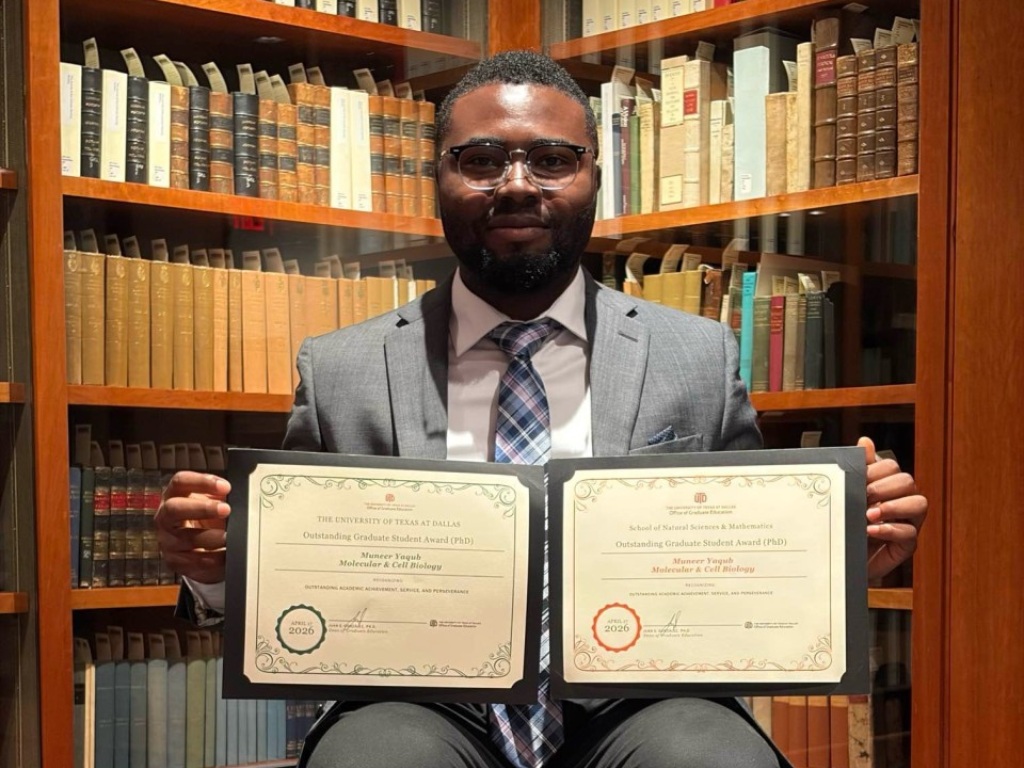
Yaqub pursued a Bachelor’s degree in Microbiology at Usmanu Danfodiyo University, Sokoto, graduating Summa Cum Laude. Source: Muneer Yaqub
The turning point came when he discovered several graduate funding opportunities for postgraduate molecular and cell biology degrees in the US. It was then that studying abroad became more accessible.
In 2021, Yaqub began his Master’s and PhD in Molecular and Cell Biology journey at the University of Texas at Dallas (UT Dallas). But because it happened during the height of the pandemic, his classes were mostly online, and, like many international students, he started his programme remotely from Nigeria.
Despite the unusual start, Yaqub made his way up the academic world. His research now focuses on antibiotic resistance, and it’s a growing global health threat.
“We’re beginning to lose antibiotics to the strong will of bacteria to survive,” he explains. “Patients are no longer responding to treatments that used to work. It’s now complex and urgent.”
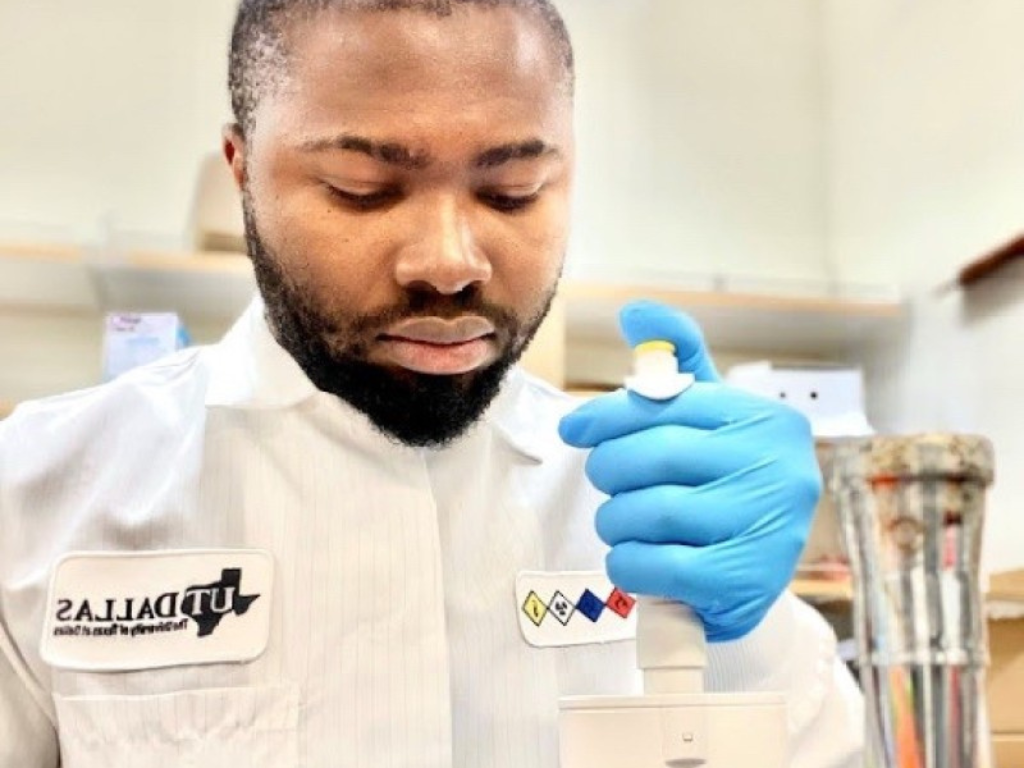
Yaqub completed a master’s degree in Molecular and Cell Biology at the University of Texas at Dallas, graduating summa cum laude. Source: Muneer Yaqub
What it feels like to win the top award in the field — and how to get there
Yaqub has no regrets about choosing molecular and cell biology over medicine. Yes, he may earn more if he chooses the latter, but to him, he has achieved much more than he would have had in medicine.
Just a couple of weeks ago, at 27 years old, Yaqub bagged the Outstanding Graduate Student (PhD) Award at UT Dallas.
“It still feels very surreal,” he says. “When I got to the US, I didn’t see that as one of the things I’d be doing.”
In fact, he didn’t apply for it at all. He was first nominated by the School of Natural Sciences and Mathematics’s Associate Dean for Graduate Education at UT Dallas. Then, he was selected from amongst the six schools’ nominations.
TL;DR, first at the department level, then across his school, and finally across six universities.
“I think I was nominated and won the award because people had been observing my work,” Yaqub shares.
The thing is, it wasn’t just his PhD work that won him the award; it was also his work beyond all his research.
Yaqub founded a non-profit initiative to help international students apply to top universities — free of charge. He took on leadership roles supporting international student communities and used his voice to highlight inequalities in academia.
One of his most impactful contributions was a commentary he wrote about the lack of fellowship opportunities for international students. “How are we supposed to compete when our hands are tired?” he recalls.
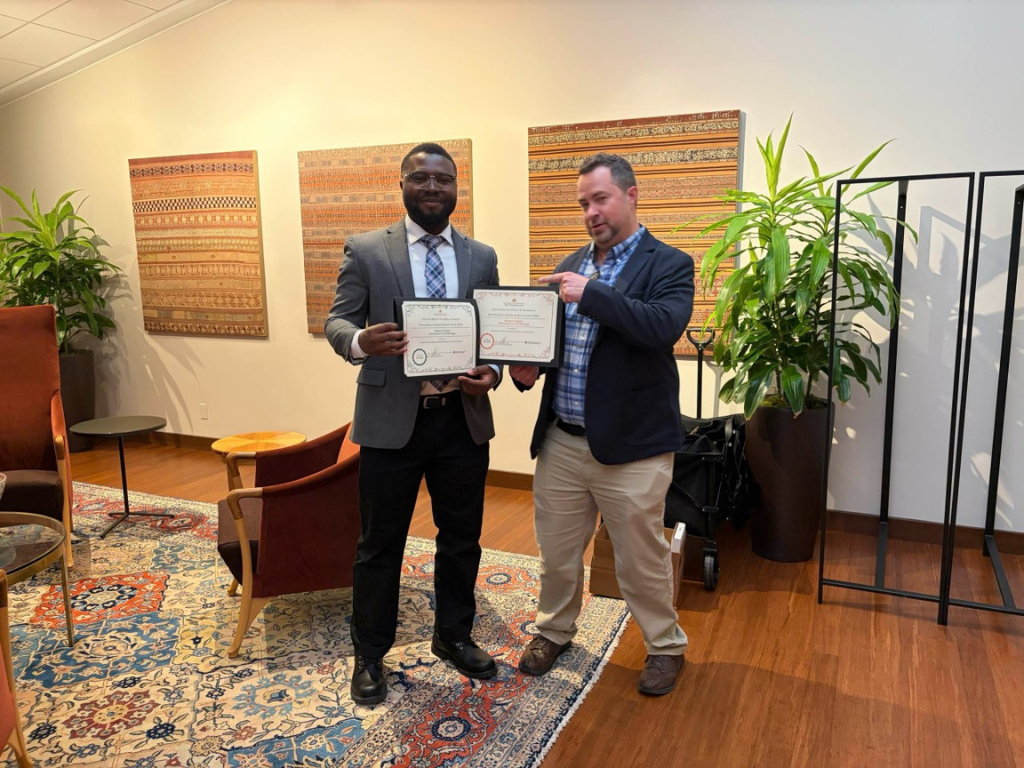
Yaqub is currently a research assistant at the Dillon Lab and a graduate teaching assistant at the Department of Biological Sciences. Source: Muneer Yaqub
The piece resonated widely and became part of a broader track record that people took notice of.
If you’re an international student aiming for similar recognition, it starts with determination.
“That’s the one word I always come back to,” he says. “I was known for being the guy who sleeps in the lab, but hard work alone isn’t enough if no one sees it.”
You need to document what you’re doing and share it with others. Yaqub draws this from his background in journalism — show, don’t tell.
Sharing achievements — big or small — helps build a visible narrative of progress.
“By the time I got the award, nobody was surprised,” he says. “They saw it coming.”
Actively seeking opportunities is key too. Most of the awards Yaqub received were things he sought out himself—asking questions, talking to people, and finding mentors.
Yaqub ends with some wise words: “I built what I have today, and it’s all through persistence, visibility, and willingness to go looking for what others might wait to be offered.”