Originally from Bangladesh, Mufrad Abir grew up watching floods disrupt homes and livelihoods. Seeing this drove him to study civil engineering, and later toward a specialism in flood risk. After earning his BSc, he looked for a master’s that matched this focus and found it at the University of Hull.
Hull stood out for its strength in environmental sciences and its closeness to the Humber region, which serves as a live case study in coastal management and climate resilience.
“While many universities offer general civil engineering or hydrology degrees, Hull’s MSc in Flood Risk Management was uniquely focused and holistic,” he says. “It integrated hydraulic modelling, environmental science, socio-economic impacts, and policy.”
That MSc became the turning point in his UK career. Abir went on to lead the hydraulic design for the UK’s largest constructed treatment wetland scheme, a project that has since won multiple industry awards. “The credibility of the degree, combined with the technical confidence it gave me, has allowed me to successfully deliver these high-profile schemes,” he says.
Abir now works as a civil engineer with Mott MacDonald Bentley, on the reservoir and sustainable drainage systems team.
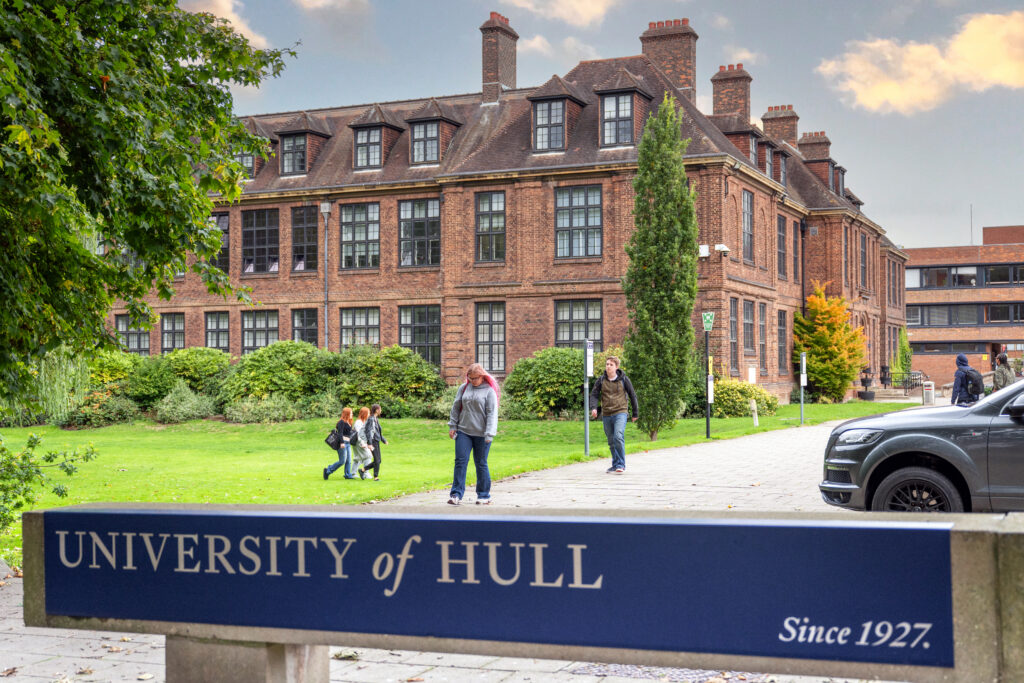
The University of Hull holds a Gold rating in the Teaching Excellence Framework (TEF) 2023, the highest recognition for teaching quality and student success. Source: University of Hull
A century looking forward
The University of Hull is built around finding better ways to live and learn for a shared future. Founded in 1927 as a “centre of light and culture,” it has grown into a place that encourages students to think differently. With its centenary approaching in 2027, its focus stays firmly on what comes next.
That commitment to a fairer, more sustainable world runs through the postgraduate programmes at the Energy and Environment Institute (EEI) and the School of Environmental and Life Sciences (SEaLS). These programmes upskill graduates for the next step in their careers, putting you face-to-face with some of the most urgent challenges of our time, from extreme weatherevents to the transition toward renewable energy. Every one of these programmes ties back to planetary health and the UN’s Sustainable Development Goals.
Hull further realises that vision with tuition fee waivers for students from the Global South, along with scholarships for applicants from Bangladesh and Indonesia through to Kenya, where an EEI or SEaLS education will matter most.
The University of Hull prepares graduates to tackle planetary challenges through its industry-relevant postgraduate programmes. Source: University of Hull
Where Hull’s environmental master’s degrees can take you
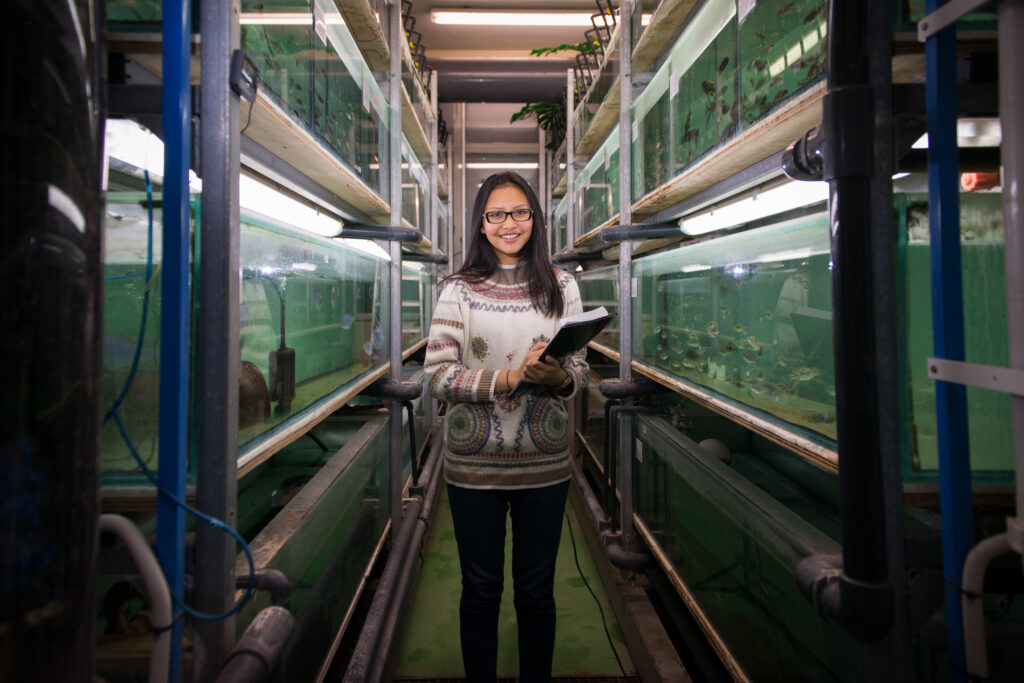
All of Hull’s postgraduate environmental programmes include experiential learning. On the MSc Environmental Change, Management and Monitoring, you’ll analyse water samples using pollution testing kits, then move into data analysis using RStudio and GIS software. From there, you’ll learn how to carry out environmental impact assessments and present your findings clearly to other scientists and environmental professionals. Field trips around the Humber Estuary, right on the university’s doorstep, give you the chance to see those environmental impacts first-hand.
Conservation work builds on that same practical foundation. Designing biodiversity monitoring schemes and understanding environmental threats form the backbone of the MSc Wildlife Conservation, and the programme pushes further into the socio-political side of conservation that employers are looking for. You’ll come away understanding how conservation operates within human communities, the tensions that it creates, and the national and international legal frameworks that shape and regulate conservation work worldwide.
A similar approach applies below the waterline on the MSc Marine Conservation. You’ll design biodiversity monitoring schemes for marine environments and assess the threats they face, while digging into issues ranging from overfishing and habitat loss to human-wildlife conflict along the coast. The course also builds practical, industry-level skills through advanced data analysis and habitat monitoring, giving you hands-on experience you’ll draw on throughout your career.
Water doesn’t stop at the coastline, though. What happens when it pushes inland, into homes and city centres? That’s the question behind the MSc Flood Risk Management, accredited by the Chartered Institution of Water and Environmental Management (CIWEM). It covers flood modelling and hydrology, as well as social science, policy and the arts and humanities, giving you a well-rounded view of the sector.
“Being able to simulate river systems and predict flood paths gave me a robust technical foundation,” Abir says. “Combining that data with a practical nature-based solutions approach to flood problems showed me how we can slow the flow of water and manage risks naturally.”
Designed with industry input, the MSc Renewable Energy and Low Carbon Solutions builds the skills the renewable sector needs, from on-shore and off-shore wind through to solar, hydropower and biofuels, plus carbon removal and the policy shaping deployment.
It’s this focus that drew Solomon Minka from Ghana to Hull. His aim is to help Ghana make full use of its renewable energy resources, tackling energy insecurity and expanding access to power across the country in the process.
“The collaboration with Aura and the Energy and Environment Institute makes the University of Hull an ideal place for advanced studies in renewable energy,” he says. “I believe I’ll gain a good understanding of a range of technologies, including wind, tidal, solar and hydro power, both through lectures and hands-on experience in the laboratory.”
Learn more about the programmes here.
Follow the University of Hull on Facebook, Instagram, TikTok, and LinkedIn