It’s one thing to know theory. But when it comes to STEM careers, you’ll need to know how to guide ideas from the abstract and into the messy, chaotic realities that define the work in this field. That’s what employers keep bringing up — and why having a bachelor’s degree, even a strong one, doesn’t mean your career growth is guaranteed.
The good news is that there are universities closing that gap. By making industry experience a key part of their master’s curriculum, you’ll get insight into how to solve advanced challenges that mirror the very same ones that companies desperately need talent for now. In their core modules, whether it’s in mathematics, computer science, or engineering, the focus is on live problems where you’ll get to test theories in simulation and real-world settings.
It’s this exposure and experience that’ll make you a sought-after candidate in various sectors, from fintech to clean energy and more. And with the UK needing 1.9 million new STEM professionals by 2035, that appeal isn’t going anywhere.
If that is the kind of STEM expert you envision being, here are three UK universities that can make that happen for you:
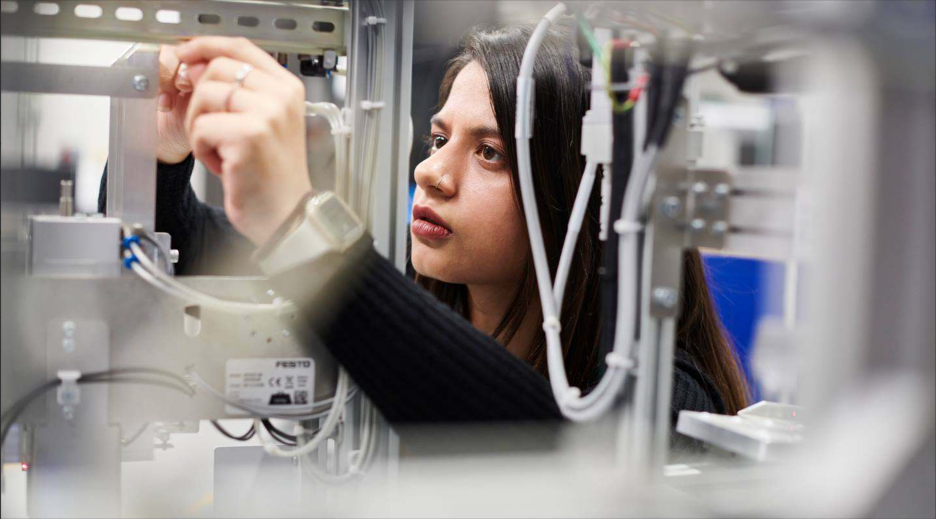
A postgraduate degree is a major investment, and at the School of Science & Technology, professional experience helps you turn it into a stronger edge in the global job market. Source: City, St George’s University of London
City, St George’s University of London
Having a STEM degree doesn’t necessarily mean you will be truly ready for careers in this field. In the UK, 43% of STEM vacancies are still difficult to fill because many applicants don’t yet have the skills or hands-on experience employers expect. The School of Science & Technology at City St George’s, University of London, has taken all this into consideration, and it shows in how the programmes are put together.
Here, industry experience is part of the degree itself. Most MSc programmes include a full-time, paid, credit-bearing placement year. And because it counts towards the degree, international students can complete the placement and accrue invaluable experience from it as well. If you prefer a shorter commitment, three- to six-month internships and three-month client-based projects are also available within the standard MSc timeline.
As finding the right placement takes work, the school has built a support system around it. Through a partnership with Twin Group, a specialist placement provider, students in AI, Data Science, Robotics, Games Technology, and Finance programmes get employability coaching, sector-specific workshops, one-to-one guidance, and direct access to UK employers. International students receive tailored support to help navigate the UK job market too.
Then there’s the school’s robust research ecosystem, home to multiple specialist research centres. The Artificial Intelligence Research Centre is one example bringing together experts in machine learning, generative AI, neuro-symbolic systems, and medical imaging, with all working on live industrial and societal problems. Student projects across the Clerkenwell and Tooting campuses cover everything from AI-driven infectious disease mapping to health-tech innovation.
All these projects happen in spaces built for them: Industry 4.0 workshops, computing labs, AR/VR simulation spaces, biomedical suites, and London’s largest indoor drone-testing facility. These are spaces where you can build, test, and debug real systems across robotics, smart manufacturing, health tech, and autonomous systems.
For those who prefer to study on their own schedule, the STEM Digital Academy offers fully online, self-paced MSc programmes in AI and machine learning, data analytics, programming, and cyber security. Each one is built around applying concepts to real-world problems from the very start.
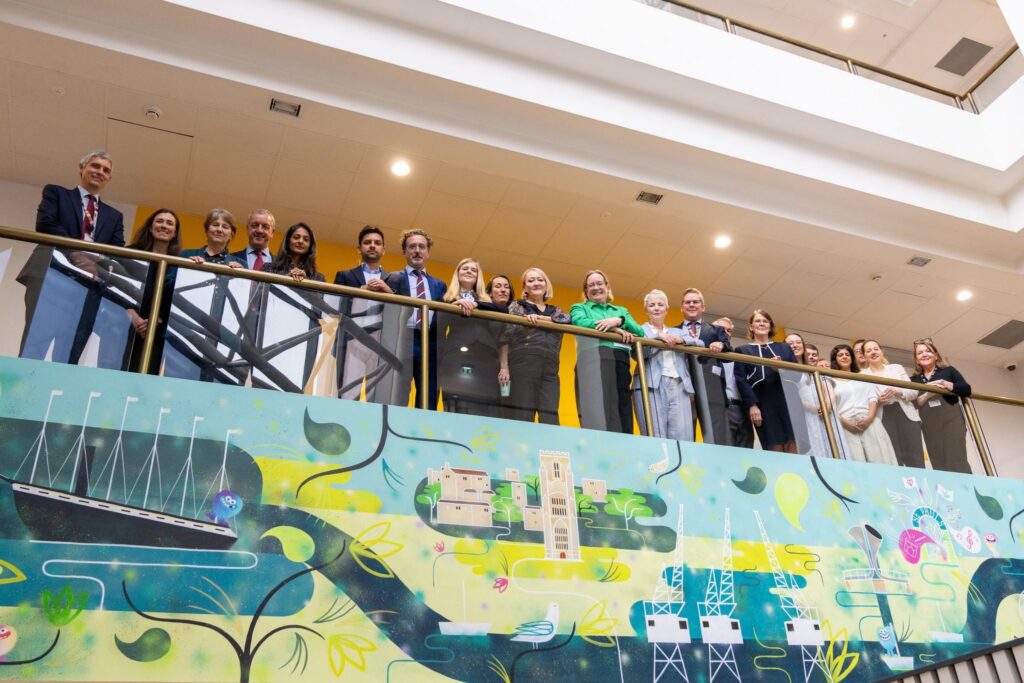
The School of Engineering Mathematics and Technology at the University of Bristol applies mathematics across engineering and beyond, focusing on AI, data science, health sciences, robotics, and engineering mathematics. Source: University of Bristol
University of Bristol
A STEM degree shows its real value the moment you use it to solve a real problem. At the School of Engineering Mathematics and Technology (SEMT) at the University of Bristol, that idea shapes everything you do as a postgraduate student.
Take the MSc in Engineering Mathematics, for example. In this programme, problem-solving is part of every unit you’ll take. You’ll work across robotics, medicine, social media, and environmental modelling, often using challenges taken directly from industry partners or live research projects. From the beginning, you’ll be applying what you learn to real problems, instead of waiting until the end of the programme to do so.
That industry connection continues throughout your studies. In the Industrial Mathematics research strand, you’ll work alongside researchers on problems brought in by external organisations. One project might focus on cleaning toxic spills, and another on redesigning bike-sharing networks. The problems are messy and specific, but it’s exactly like the real world, and you’ll get to work alongside top researchers tackling them.
If you’re interested in robotics and autonomous systems, the Bristol Robotics Laboratory is a great place to start. As an MSc Robotics student, you can base your research there, working alongside academics and industry partners in one of the UK’s leading robotics facilities.
Regardless of the programme you choose, by the time you graduate, you’ll be ready to move into engineering consultancies, data science, quantitative finance, intelligence services, and the Met Office. Even into leading start-ups of your own. The programme’s three interconnected strands — engineering, computational science, and mathematical and statistical training — will give you the range to work across industries.
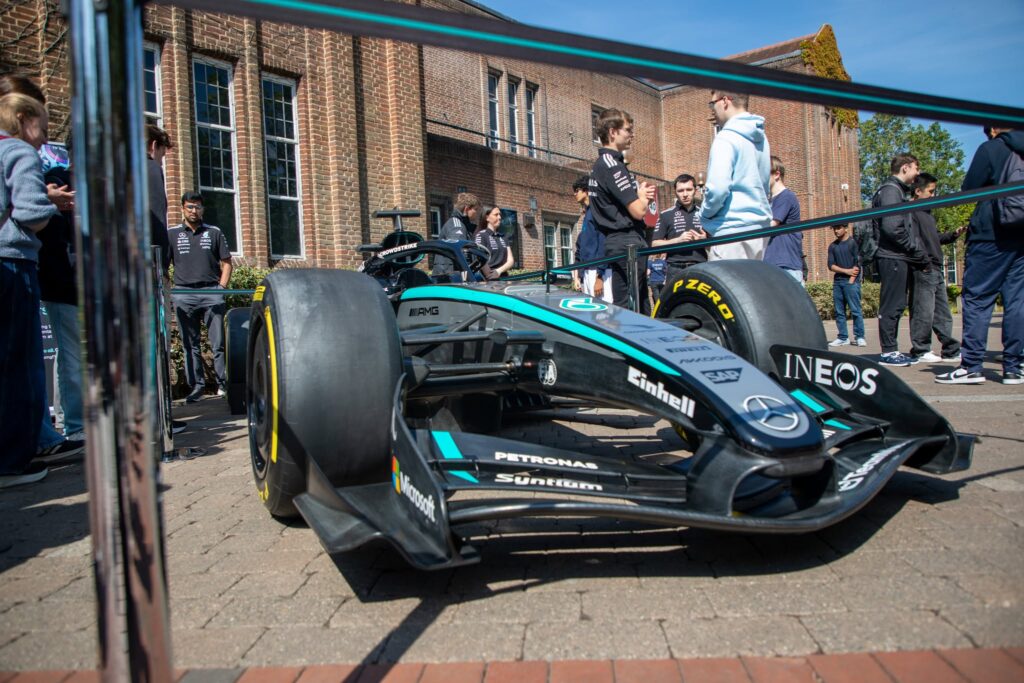
At the Faculty of Engineering and Physical Sciences, you’ll benefit from advanced multi-million-pound facilities and leading experts, including Fellows of the Royal Society and the Royal Academy of Engineering. Source: University of Southampton
University of Southampton
The sectors you want to work in — aerospace, maritime, AI, clean energy — are hiring for what you can do with your degree, under real conditions, on real problems. The University of Southampton‘s Faculty of Engineering and Physical Sciences is built for exactly that.
With MSc programmes spanning Electronics and Computer Science, Mechanical Engineering, Aerospace, Chemistry, and Physics, this is one of the UK’s largest engineering communities — where 96% of research is rated world-leading or internationally excellent in the latest Research Excellence Framework, and industry access is built into how you learn.
Take the MSc Aerodynamics and Computation, for example. You’ll work on numerical methods, turbulence modelling, and computational fluid dynamics, using the RJ Mitchell Wind Tunnel — the largest university wind tunnel in the UK, used by Formula One teams and Olympic athletes. Past students have even run research projects for Dyson and Rolls-Royce, and many graduates go on to work at both.
That kind of industry connection runs across the whole faculty. Leonardo, Airbus, Mercedes, and Maserati MSC Racing shape the delivery of engineering programmes. Meanwhile, in the maritime sector, the Centre for Maritime Futures brings Shell Shipping and Maritime into ship design teaching and postgraduate MSc research projects.
The same applied focus carries through to computing and AI. The MSc Data Science sits within Southampton’s partnership with The Alan Turing Institute — the UK’s national body for AI research — covering machine learning, data mining, and real-world application scenarios drawn from industry.
The faculty’s MSc programmes are highly regarded by leading global employers, and the partnerships built into every programme mean you graduate with a proven track record of working on real problems and with real industry.
*Some of the institutions featured in this article are commercial partners of Study International