Who Needs This? A Tale of Two Industries
We’ve seen the anti-college backlash before.
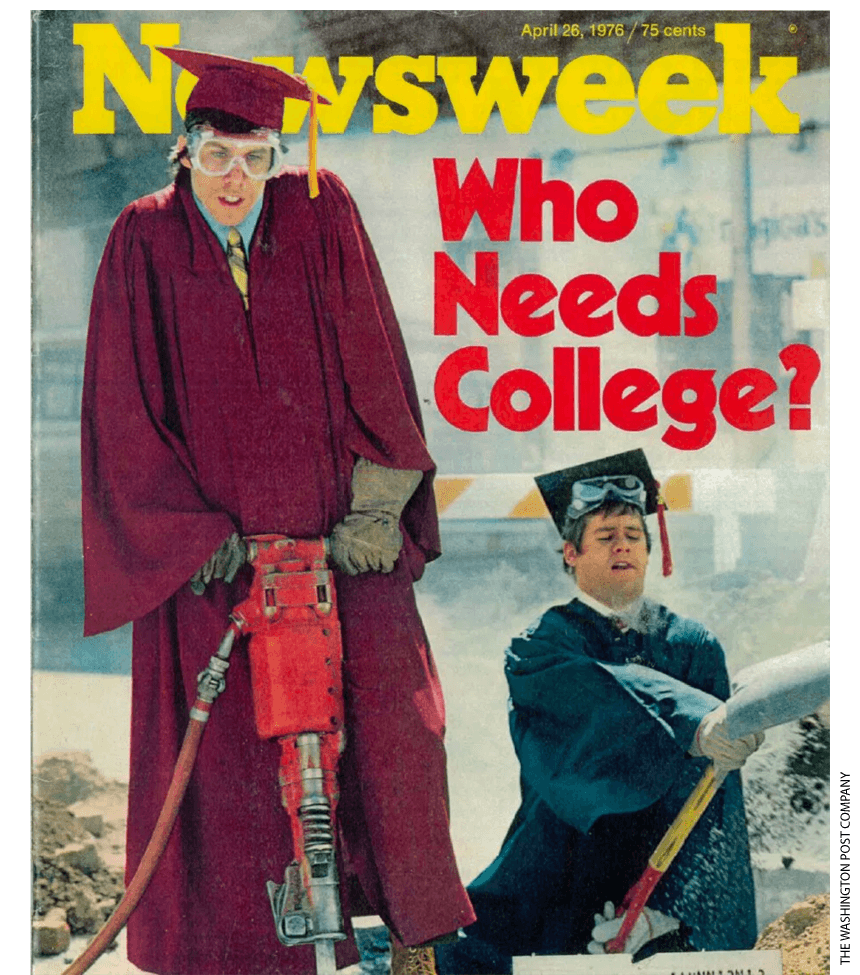
In 1976, an issue of Newsweek featured a provocative cover story: “Who Needs College?” The themes will sound familiar. Amid stagflation and a tough job market for new graduates, the article reported on the declining value of a degree and rising public misgivings about pushing every high schooler down one narrow pathway.
Education wasn’t the only sector facing doubts about whether everyone needed access. In 1977, Ken Olsen of Digital Equipment Corporation (DEC), the leading computer company of the era, infamously declared there was “no reason for any individual to have a computer in their home.” His company may have pioneered the minicomputer, but it would soon face a market tsunami that might appropriately be dubbed “Computers for All.”
The storm took its time to land. As late as 1989—the year DEC’s public collapse began—people still needed convincing that the home computer belonged in daily life. That year, Matt Groening (who in December would graduate his Simpsons characters from shorts on The Tracey Ullman Show to a debut in their own animated series), drew Bongo the one-eared rabbit as a pitchman in an Apple pamphlet titled Who Needs a Computer Anyway?
Today, that question makes sense only as an act of irony or iconoclasm.
The year 1989 turned out to be a hinge for both college and computers. More Americans held a bachelor’s degree that year (21 percent) than American households had a home computer (15 percent). Over the next three decades, access to both became a rallying cry. Bachelor’s degree attainment roughly doubled to 39 percent. Computer ownership grew more than sixfold.
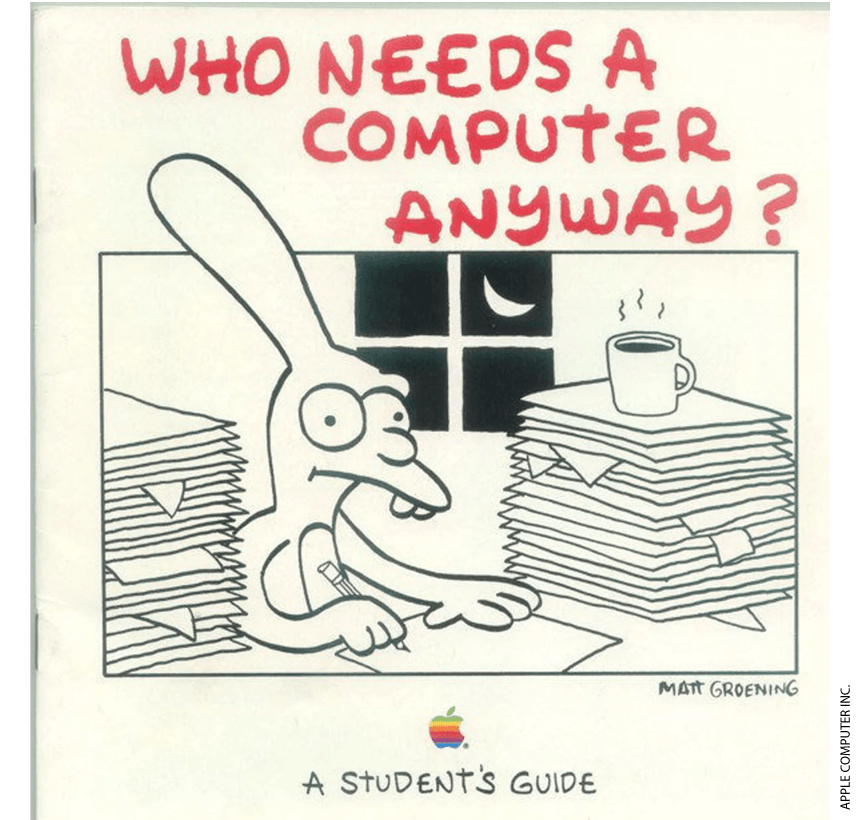
Bongo’s question was meant to make a case for the computer, and within a generation the thing was universal. Will the same trajectory follow today’s obituaries for College for All? Some leading voices now say the approach hasn’t worked, was never going to work, and maybe wasn’t such a good idea to begin with. Education Design Lab founder Kathleen deLaski, who used to be on the College for All bandwagon, now imagines a world where degrees matter much less. The title of her widely read (and debated) 2025 book on the topic intentionally echoes the 1976 Newsweek cover: Who Needs College Anymore?
But as in 1976, the data today don’t support that conclusion. The investment return on a four-year college degree versus most short-term credentials remains, on average, in favor of a degree. Meanwhile, some commonly championed postsecondary alternatives are starting to acquire the very dysfunctions that tarnished college. For example, as demand for the trades has begun to outstrip the capacity of community colleges and apprenticeships, students are being pushed into private trade schools, where tuition runs tens of thousands of dollars.
Despite public disillusionment, the conditions haven’t yet seriously allowed for the reinvention—and disruption—of the undergraduate degree itself. One reason may be that we aren’t asking the right questions about college.