The way energy is produced and delivered is changing, and engineering education is changing with it. As countries invest in cleaner energy, they also need engineers with new skills to support that transition. Global energy investment is expected to reach US$3.4 trillion in 2026, with around US$2.2 trillion going towards renewables, nuclear power, electricity grids, energy storage, low-emissions fuels, efficiency, and electrification.
This shift is changing what employers are looking for. The World Economic Forum identifies AI, big data, cybersecurity, networks, and technology literacy as some of the fastest-growing skills. At the same time, engineers are expected to understand how different parts of an energy system work together while keeping sustainability in mind. These skills are becoming increasingly important as technology and infrastructure become more connected.
Four institutions, spread across continents, are responding to this same pressure in different ways. While each institution has its own strengths, all of them aim to prepare you for the same challenge.
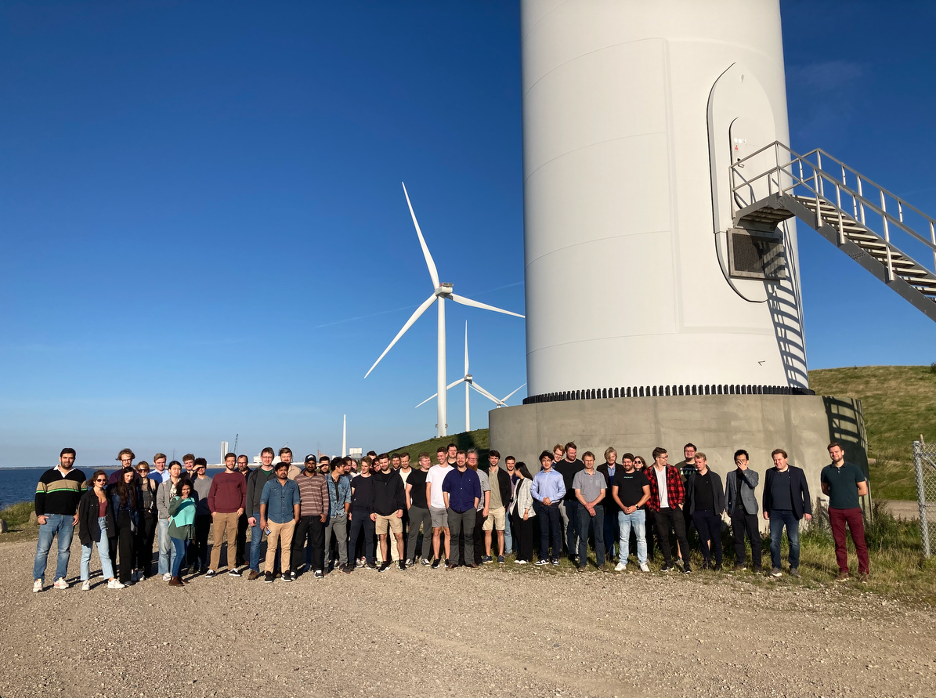
Aalborg University’s Department of Energy focuses on a sustainable energy future through research in renewable energy, energy efficiency, distribution systems, energy conversion, and smart energy control technologies. Source: Aalborg University
Aalborg University
A building that stores heat like a battery stores electricity and a drone that flies and then dives underwater to inspect an offshore wind turbine are just two of the many innovations Aalborg University‘s Department of Energy are working on. Both are breakthroughs that tackle real-world energy challenges – study here and you too stand to achieve the same.
That starts with how the department teaches. Aalborg University is internationally recognised for its Problem-Based Learning model, where theory comes to life industry-linked projects. Whether you study Energy Engineering, Sustainable Energy Engineering, or Advanced Power Electronics, you’ll spend much of your degree with your project group. You’ll test ideas and improve existing systems while building the technical and teamwork skills employers value.
In the Energy Engineering programme, for instance, you get to complete a company internship by your third semester, either in Denmark or abroad, on top of all you’ve learned through the industry projects you’ve already been working on.
Then there’s the ENERGY HUB, Denmark’s first mini energy park for education. Backed by DKK 53 million (around US$8 million) from the Novo Nordisk Foundation, the facility lets students gain exposure and experience with solar, wind, hydrogen, energy storage, and carbon capture technologies. Through real-time experiments, you’ll see how these systems work together in a functioning renewable energy ecosystem.
Your lecturers will be researchers leading the energy transition. One of them is Professor Frede Blaabjerg, who teaches in the Advanced Power Electronics programme. Named the world’s top researcher in electronics and electrical engineering by Research.com in 2026, his work focuses on power electronics for wind turbines, solar systems, and Power-to-X technologies. Power-to-X converts surplus renewable electricity into fuels such as hydrogen, enabling the storage of clean energy for later use. Learn more about Aalborg University’s Department of Energy.
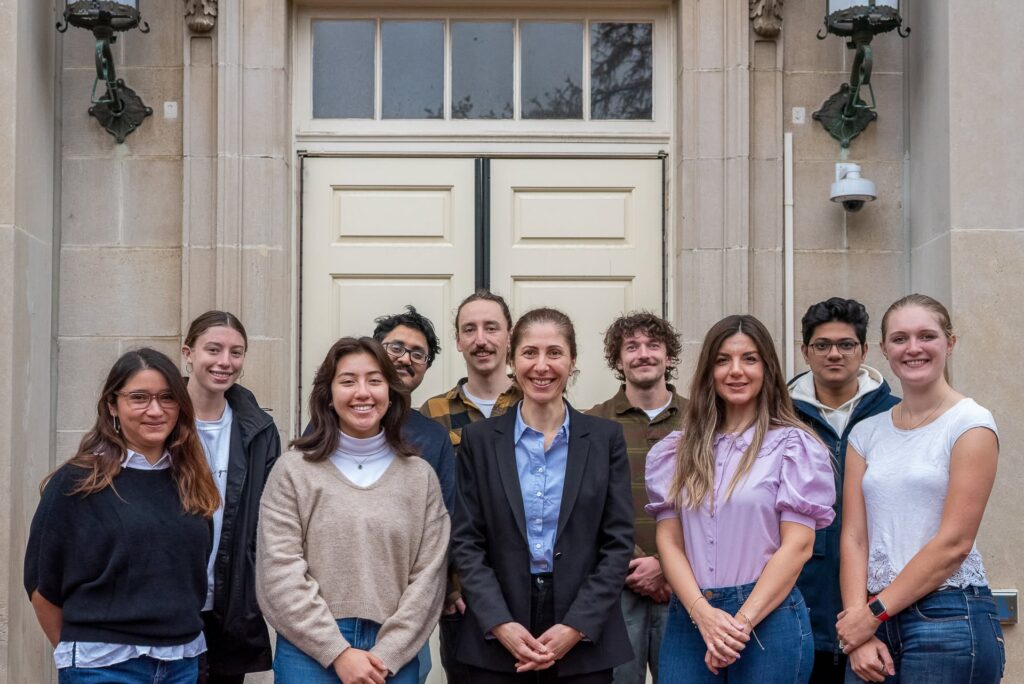
The Department of Energy and Mineral Engineering equips students with expertise to tackle current and future energy and environmental challenges. Source: Pennsylvania State University
Pennsylvania State University
At Pennsylvania State University, one of the most interesting carbon capture projects begins in an unexpected place: the campus bakery. Instead of treating the bakery’s boiler emissions as waste, graduate researcher Matthew Hollingham collects the flue gas and passes it through crushed basalt rock. This process captures carbon dioxide and converts it into calcium carbonate, a material that can be added to concrete. Since concrete production is one of the world’s largest sources of industrial carbon emissions, the research offers a practical way to reduce its environmental impact by using emissions that would otherwise enter the atmosphere.
Projects like this reflect the hands-on approach of Penn State’s Department of Energy and Mineral Engineering (EME). Rather than focusing on a single solution to climate change, the department encourages you to understand the entire energy system. You can explore petroleum engineering and reservoir characterisation alongside electricity market design and grid integration within the same programme.
Recognising the industry’s changing needs, the Petroleum and Natural Gas Engineering programme is expanding its curriculum to include geologic carbon dioxide storage and hydrogen storage. A new Carbon Capture, Utilisation, and Storage certificate is also being developed, giving you specialised training in emerging low-carbon technologies.
The university’s interdisciplinary approach extends beyond the classroom through initiatives such as the Centre for CO2 Storage Modelling, Analytics, and Risk Reduction Technologies (CO2-SMART), a collaboration between Penn State and the University of Southern California. The centre brings together researchers from engineering and earth sciences to tackle the regulatory and legal challenges involved in underground carbon storage. By combining expertise from different disciplines, the research addresses how carbon can be stored safely and how such projects can be implemented responsibly.
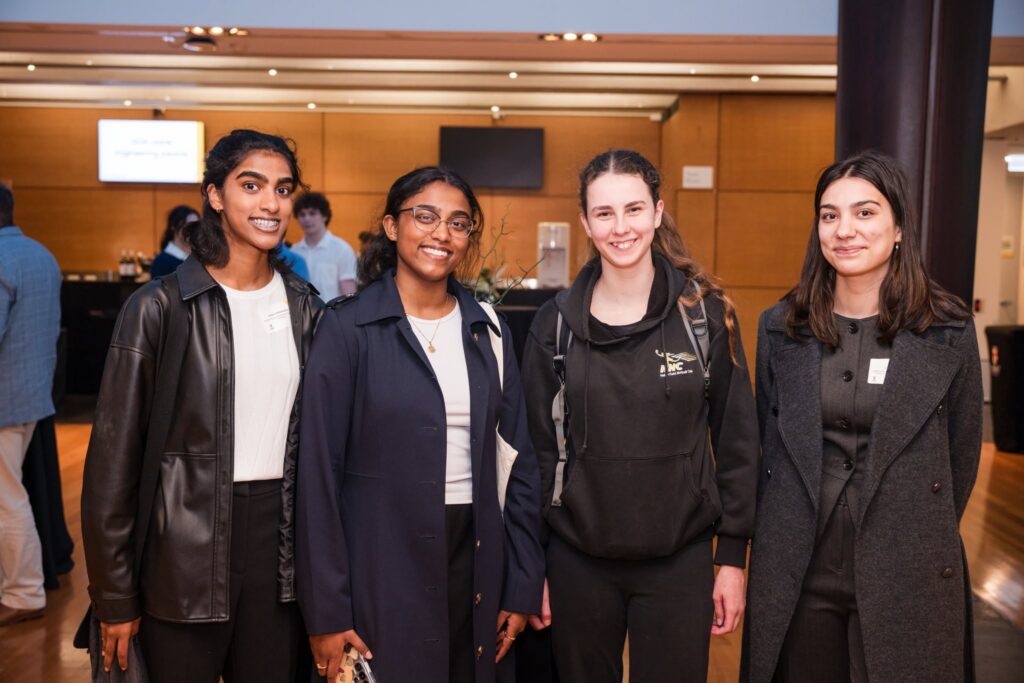
For over 40 years, UNSW’s School of Photovoltaic & Renewable Energy has been a global leader in solar and renewable energy education, offering the world’s only degree of its kind. Source: University of New South Wales
University of New South Wales
More than 85% of the world’s solar panels are built using technology that started at the University of New South Wales (UNSW). In 1983, researchers at UNSW developed the Passivated Emitter and Rear Cell (PERC) solar cell, a breakthrough that has become the standard design for most modern solar panels. The innovation came from UNSW’s School of Photovoltaics and Renewable Energy Engineering (SPREE), which has spent over four decades turning lab breakthroughs into the technology now sitting on rooftops worldwide.
The person behind this achievement is Scientia Professor Martin Green, who started his solar research group at UNSW in 1974. His team developed the world’s first 18% efficient silicon solar cell in 1983, setting a new benchmark for the industry. Since then, the group has continued to lead the field, developing technologies such as PERC and TOPCon, which now power more than 90% of silicon solar panels produced around the world.
Beyond its research achievements, UNSW has played a key role in educating future experts in renewable energy. In 2000, SPREE launched the world’s first degree programme focused on photovoltaics and renewable energy engineering. Today, more than 2,000 graduates from the programme are working across the global clean energy industry.
Back at SPREE, research continues to push the boundaries. In 2026, the team set a new world record by achieving a certified 10.7% efficiency for antimony chalcogenide solar cells, a promising material for future solar panels. Researchers have also achieved electricity conversion rates of more than 40% using advanced solar technologies. Much of this work takes place at the Australian Centre for Advanced Photovoltaics, where UNSW works with research partners across Australia to develop the next generation of solar energy.
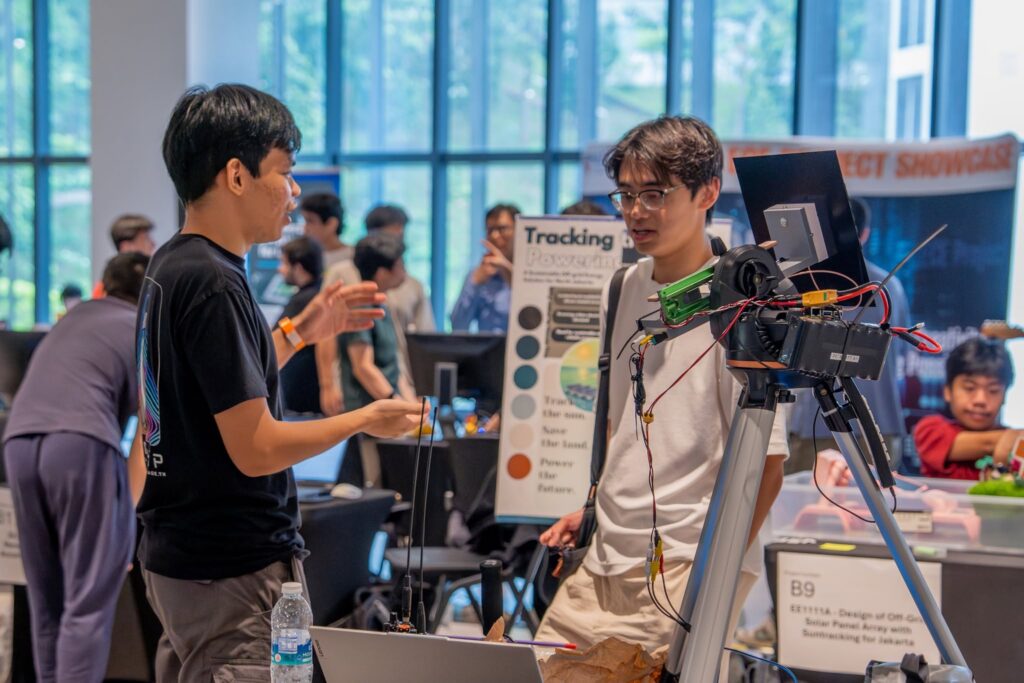
The Green Energy Management and Smart Grid Research Centre at NUS brings together key stakeholders to drive innovation in smart grids and the energy sector. Source: National University of Singapore
National University of Singapore
At the National University of Singapore (NUS), you’ll learn in a setting where the city itself becomes part of the classroom. Through the Green Energy Management and Smart Grid Research Centre, you’ll work on real challenges in microgrid control, fault analysis, and renewable energy integration. Since Singapore is one of the world’s most densely populated cities, every project is designed around the practical demands of an urban power system.
You’ll see the same practical approach in NUS’s Sustainable Electric Transportation specialisation. As Singapore moves towards phasing out all internal combustion vehicles by 2040 and expanding its EV charging network to 60,000 stations by 2030, you could be helping to develop solutions for a transition that is already taking place. Rather than studying hypothetical scenarios, you’ll work on challenges that mirror the country’s actual plans.
Industry collaboration is another key part of the learning experience. The Green Energy Management Research Centre gives you direct exposure to industry through projects developed in collaboration with corporate partners. You’ll solve operational problems before testing your ideas on a smart grid testbed that brings together power generation with wireless communication systems. Along the way, you’ll explore topics ranging from grid security to service restoration, while gaining hands-on experience with renewable energy integration and advanced control methods used in modern power systems.
The Energy Studies Institute broadens your perspective beyond technical engineering. You’ll examine how energy policies influence infrastructure development, study carbon pricing, and learn how countries across Asia are approaching the energy transition. By combining engineering with policy, you’ll graduate with a clearer understanding of both the technology behind modern energy systems and the regulatory environment that shapes how they are deployed.
*Some of the institutions featured in this article are commercial partners of Study International