Behind Northland’s closure — and the bid to keep its mission alive
Editor’s note: The College Closure Files is an occasional column chronicling why institutions shuttered and what lessons higher education leaders can glean from those shutdowns.
Northland College was once a fairly typical liberal arts institution, tucked away in the northern woods of Wisconsin along Lake Superior. Then, in the 1970s, its leaders pushed a transformation that wove environmental themes throughout its curriculum, a change that defined the college until it shuttered in 2025 after years of enrollment and financial struggles.
Here’s a look at the college’s history, its closure and the efforts of former faculty to resurrect Northland as a microcollege.
Northland’s early years
Northland’s Christian missionary founders built the campus near the shores of Lake Superior’s Chequamegon Bay, in a region known then for intensive logging. Locals called that area of northern Wisconsin “the Cutover” after loggers decimated its old-growth forests, straining the livelihoods and ecosystems of the region.
After an effort last century to attract settlers to farm those deforested lands failed — the soil was ill-suited to agriculture — many acres were reclaimed by counties as forest preserves. Today, the college is surrounded by some of those preserves, parks and Native American reservations, all of which helped define the institution and students’ experience there.
Northland College at a glance:
Founded: 1892
Closed: 2025
Location: Ashland, Wisconsin
Institution type: Four-year, private nonprofit
Student body: 286 (fall 2024)
From its beginning, the college’s story was tied to that of its natural environment. Its founders “believed the college was linked to the land and the people who worked it,” according to a 2019 University of Wisconsin-Madison doctoral dissertation on environmental education by Andrew Davey.
Or, as one-time Northland President Malcom McLean, who died in 2014, put it in a 1986 article for the journal New Directions for Higher Education, the college’s ethos “was forged in the harsh, long-wintered life of the North.”
For roughly the first eight decades of the college’s life, Northland was a fairly traditional small private institution, focused mainly on music, teacher training and general liberal arts.
“The curriculum, if limited, was seriously presented,” McLean wrote. “Over the years, Northland graduates taught in schools, preached in churches, and ran businesses, mostly throughout the upper Midwest.”
He also described the college’s operations in the early 20th century as “informal” and “personalistic.” When Northland would sometimes fail to make payroll during the Great Depression, its faculty and staff waited for pay “with uncommon patience and forbearance,” McLean wrote.
By the 1950s, the institution had drifted away from its explicitly Christian mission, though it maintained a relationship with the United Church of Christ and sat on the church’s higher education council until Northland’s closure.
Shortly after Robert Cramer became president of the college in 1968, he started a process that would transform Northland. He created a faculty committee tasked with incorporating environmental studies into the curriculum, and he began raising funds to drive the new programming.
This followed a suggestion by Wesley Hotchkiss — a Northland alum who served as general secretary for the Church of Christ’s higher ed division — that the college could model itself after “a new concept of undergraduate curriculum and utilize the environment as a major learning resource.”
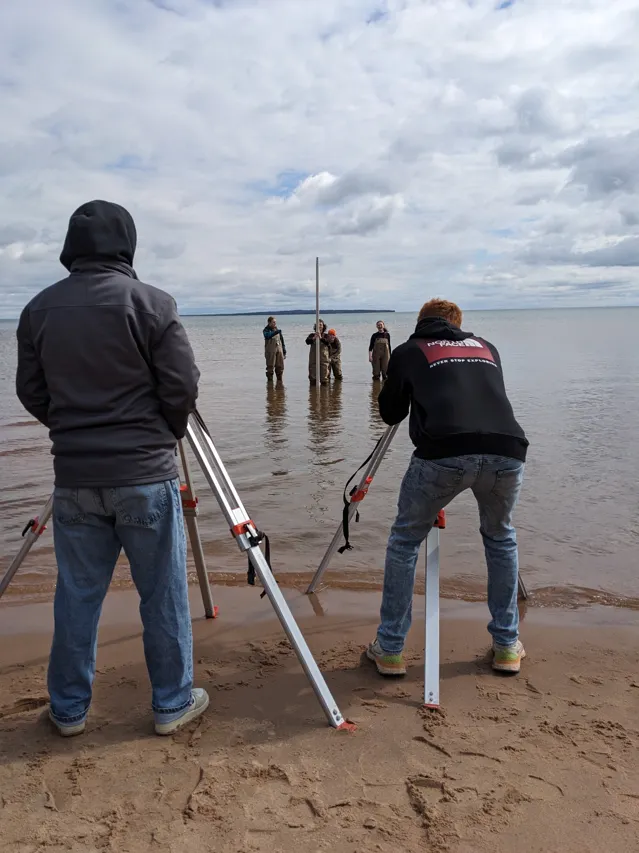
Northland students study shoreline depth along the western shore of Lake Superior’s Chequamegon Bay in Wisconsin in 2024.
Permission granted by David Ullman
Bruce Goetz, then a new science professor, chaired the faculty committee. As he later told Davey, Northland’s dean of academic affairs had approached Goetz — who had no prior experience in environmental studies curriculum — out of the blue while the professor was lounging and thinking during a work break at the shore of Lake Superior.
This happened at a time of rising environmental awareness and activism throughout the country. That included Wisconsin, a state that has been home to giants of naturalism and conservation advocacy, among them John Muir, Aldo Leopold and Sigurd Olson. Olson was a Northland graduate who later championed the college’s reorientation around environmentalism as a trustee for the college.
As McLean described the curricular and mission transformation at Northland, the goal was to weave environmental studies throughout the institution and its programs. He described a “key” decision by leadership “not to place environmental studies in a separate department.”
“Rather, it was to flow through the curriculum and touch all possible aspects of Northland academic life,” he wrote.
During the 1970s, Northland also created programs in outdoor recreation and Native American studies. The latter was a natural choice given the college’s proximity to reservations.
In 1978, the college missed its enrollment targets by 10%, precipitating a cash flow crunch. According to McLean, this brought a “courageous quickening of Northland’s transformation.” The college declared financial exigency, a process by which distressed institutions can quickly cut programs and tenured faculty.
Northland shed seven faculty positions — around 14% of its faculty body at the time — as well as administrative jobs. The cuts helped the college sharpen its environmental focus and ultimately its enrollment pitch, in McLean’s view. “Northland now had programs that fit into its educational mission and gave admissions representatives attractive messages for potential students,” he wrote.
The environmental approach to liberal arts created a legacy that would last through the rest of Northland’s life. Its final course catalog included art classes tied to nature, business classes in ecotourism, literature and writing courses centered on nature and the Lake Superior watershed, and philosophy classes in environmental ethics and conceptions of nature, among many others exploring nearly every aspect of the natural world and humanity’s engagement with it.
While the college evolved after the 1970s — and still wrestled with its budget — it continued to attract environmentally minded faculty and students until its final days. And like earlier generations, they saw the college as inextricably tied to its natural setting.
“We’ve got a lot of public lands, a lot of county forest, a lot of national forest — so a lot of places that you can go on field trips right nearby, with pretty diverse ecosystems and amazing geology,” said Tom Fitz, a former geology professor at Northland.
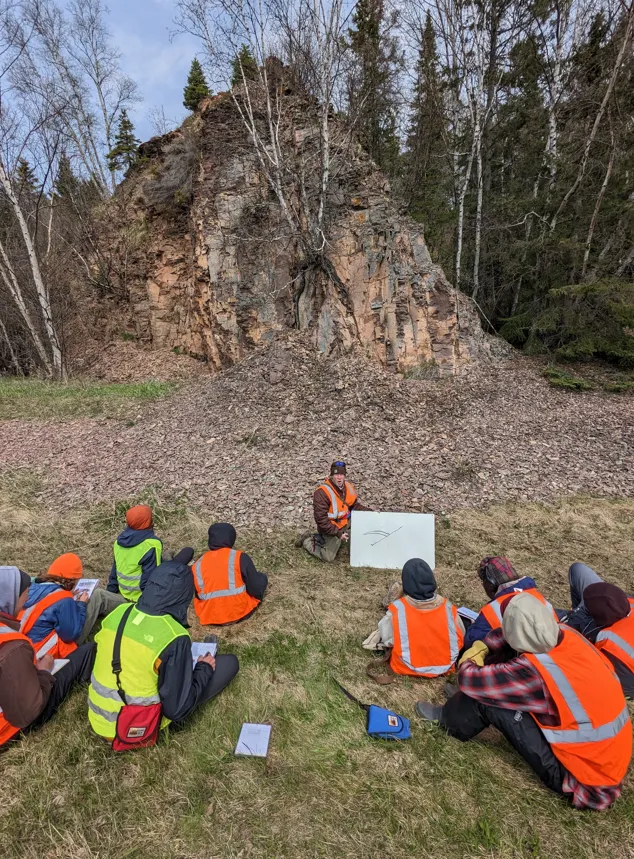
Tom Fitz, then a Northland geoscience professor, teaches students from the college about volcanic flows along the Minnesota shoreline of Lake Superior in 2023.
Permission granted by David Ullman
Growing up in southern Wisconsin, David Ullman was aware of the college as “a beacon” of environmental education in the upper part of the state. He ended up a geoscience professor at Northland — as it happened, he took over Goetz’s faculty spot.
Both Ullman and Fitz said the proximity of public lands and natural landscape made for rich learning and fieldwork opportunities for students. In terms of geology, the area is a “candy store,” Ullman said.
Northland’s Path to closure
The college “struggled financially throughout its history,” Fitz said, noting a year during World War II when the institution graduated just one or two students.
His own career at Northland lasted 25 years, and he had seen his share of close calls.
“It had been on the brink before,” he noted. “In my time, there were several times when I was like, ‘Oh yeah, we’re in real trouble now.’ But the college always sort of pulled through. We’d get just enough students the next year, or we’d get another big gift.”
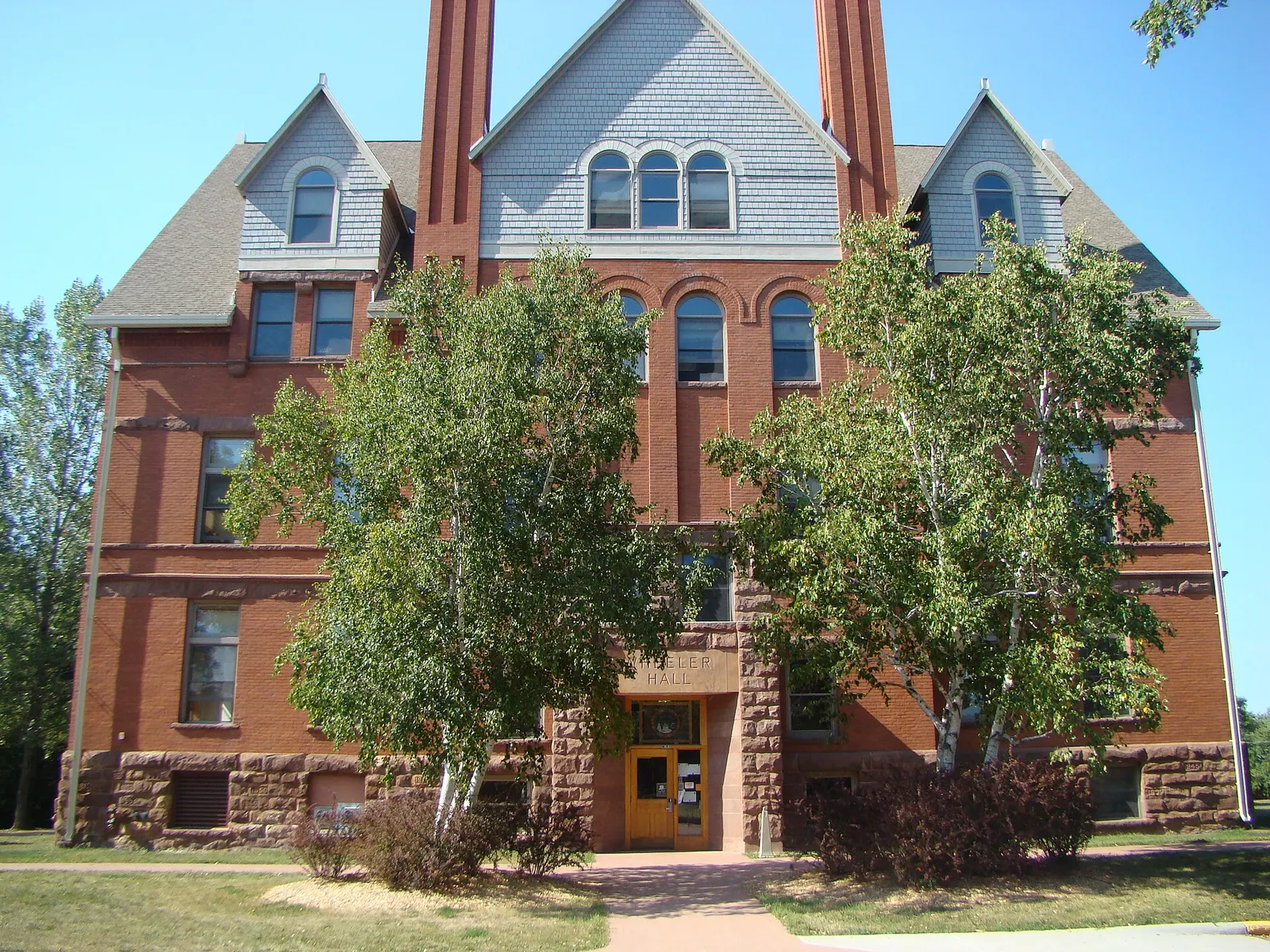
Built in the early 1890s, Northland’s Wheeler Hall, in Ashland, Wis., shown here in 2012, once comprised the entire college.
Emily Macgillivray, a former professor at the college, started teaching at Northland in 2017. The spring term before she started, employee pay was cut as the institution tightened its belt. During her roughly seven years there, Macgillivray saw administrative turnover at all levels as well as four different presidents. That churn made long-term planning and institutional adaptation difficult, in her view.
Northland officials declined an interview request.
But Board Chair Ted Bristol emailed a statement to Higher Ed Dive in late April, saying, “The Board is still very much focused on the process of an orderly closure of the College and the sale of campus.”
Throughout its later years and for much of Northland’s existence, enrollment was a perpetual struggle. Always small, Northland faced the same demographic challenges that have plagued many other liberal arts colleges. In fall 2023, its headcount fell to 485, down nearly 17% from five years prior.
“In my time, there were several times when I was like, ‘Oh yeah, we’re in real trouble now.’ But the college always sort of pulled through.”

Tom Fitz
Former geology professor at Northland
One of the key features of Northland’s identity — its location in the rural, woodsy, cold northern reaches of Wisconsin — might have become a liability as the U.S. became ever more oriented culturally and economically around urban areas.
“It was a great place to be, but Ashland, Wisconsin, is kind of out of the way,” Fitz said. “There was a struggle in being in the Northwoods and trying to attract students.”
At the same time, some former faculty say that the institution, in some measure, strayed from the purpose forged in the 1970s.
“It was a really unique place with a really unique sense of community,” Ullman said. “I don’t think the institution always lived up to its mission toward the end. It tried to be too many things to too many people.”
Ullman said he thinks some of the college’s trustees were “not so much tuned into the beauty of Northland.” A primary area of difference was athletics, he said, which in turn could influence academics when the board prioritized programs favored by athletes.
“They saw athletics as a way to get students there,” he said. “They wanted a football team.”
Northland and football, in fact, had a long and conflicted relationship through its history. The institution dropped the sport after its environmental transformation — a withdrawal that McLean called a “major episode” in his article.
“The athletics and admissions departments argued vigorously that enrollment would suffer by taking away football, a quintessential American sport,” McLean wrote. “As one professor asserted, Northland would be seen as lacking something essential to a modern American college.”
Decades later, in 2017, the college’s board hired a consultant to examine its athletics programs, including a possible restart of a football program. The board at the time used much of the same logic put forth by football supporters decades ago.
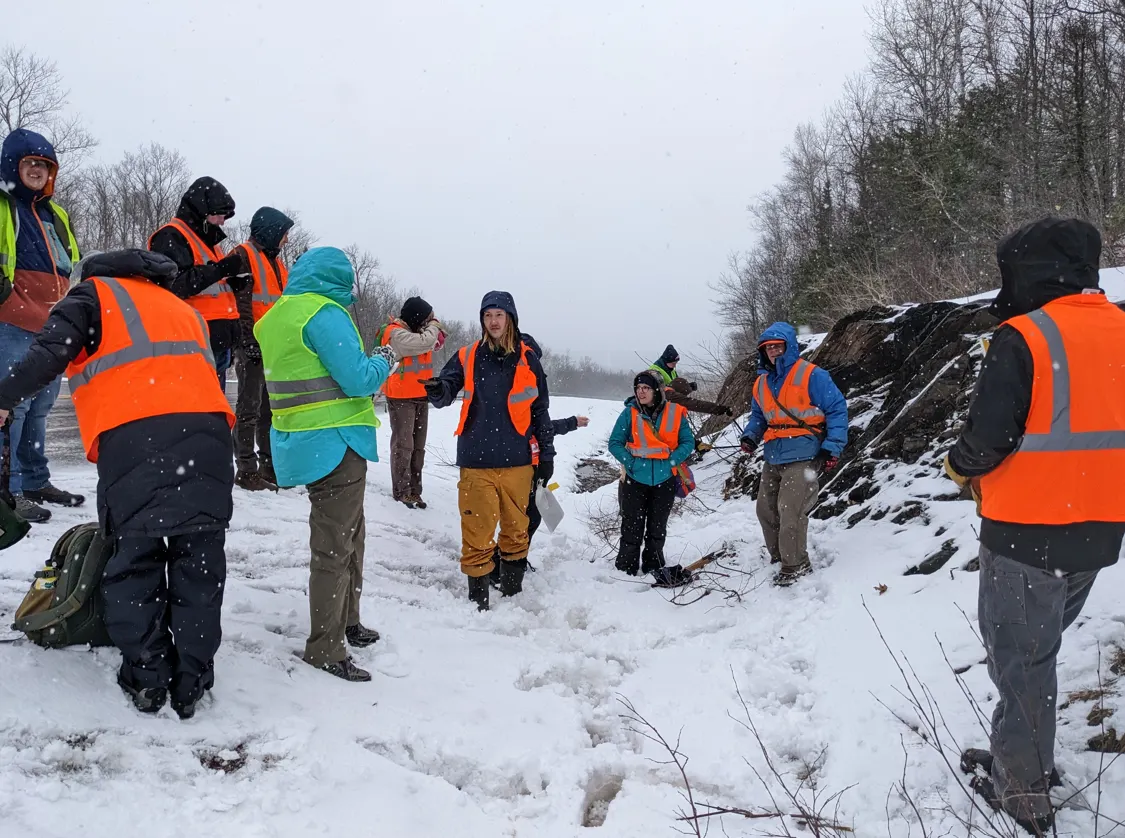
Northland geology students weathering spring in northern Wisconsin in 2023.
Permission granted by David Ullman
“The need for further enrollment growth, and the recruiting success of new teams, convinced the board that the time is right to consider whether new, smart investments in the athletic department — most notably football — would benefit (or detract) from the College,” then-Chair John Allen wrote in a community letter at the time.
The move prompted a petition from opponents who said football didn’t fit with the college’s ethos. The college never did relaunch a football program, but the efforts were enough to generate tension within the institution.
“Athletics is a mixed bag,” Ullman said. “In my tenure at Northland, it became this wedge issue.”
Over time, the enrollment problem became an increasingly critical money problem. Northland’s assets dwindled in its final years. Between fiscal years 2021 and 2024, its investment holdings shrank 42.1% to $3.7 million, greatly limiting its financial cushion — and providing a telltale sign that the college was in financial trouble.
In fact, between 2015 and 2024, the college borrowed some $22 million from its endowment to cover its operating costs and cash flow shortages and repay its credit line, Wisconsin Public Radio reported in February.
Then, in March 2024, the college made an announcement that startled many: It needed to raise $12 million — inside of a month — or it may have to close.
“That was a surprise to most of us,” said Ullman. Faculty generally knew of perpetual budget tightness and money struggles, but they didn’t know they were this close to the brink.
Ullman described the college’s $12 million goal as an “ultimatum” and “a ransom note.”
“Who wants to give money to a college that says, ‘We’re about to close unless you give us this money?’” he asked.
Northland missed its Hail Mary fundraising goal — by a lot. It only raised $1.5 million by its early April self-imposed deadline.
Yet it didn’t close.
However, at a critical time in the spring when students make decisions about their enrollment, Northland waffled, saying it would wait weeks before making a final call about whether to stay open.
Roughly a month later, it unveiled a plan to stay open and refocus around eight programs while shedding the rest in financial exigency. The college said at the time that the cuts put the college “on track for long-term stability.”
“It is not lost on us that today’s announcement could have gone a very different direction,” Bristol said then.
But the reprieve lasted less than a year. In February 2025, Northland made yet another announcement: It would shutter at the end of the 2024-25 academic year.
As Bristol explained at the time, “With declining enrollment and soaring costs, it takes more to operate the College than we raise in tuition.”
Enrollment numbers played a leading role in the demise. In fall 2024, after Northland’s brush with closure the previous spring, just 286 students enrolled. That represented a collapse of its student body — a 41% drop from the prior fall.
“All of the uncertainty that ensued after 2024 meant that lots of students left,” Ullman said. “Enrollment just tanked. It made sense for students who were freshmen or sophomores to go someplace else where they could see a future for their education.”
Will Northland get a second life as a microcollege?
Northland closed its doors just about a year ago. The board is still winding down the institution’s affairs and liquidating its assets, which totaled $39.4 million in its latest financial statements.
That includes $28.6 million in mostly real estate, as well as in equipment and library books. As of early July, Northland’s campus was listed for sale with a $12 million price tag by real estate services firm Newmark.
The listing went live in March. Highlights of the property include “the newest and largest athletic and fitness center in northern Wisconsin,” “numerous residence halls” and “an environmental retreat center featuring organic architecture in perfect harmony with its woodland setting.”
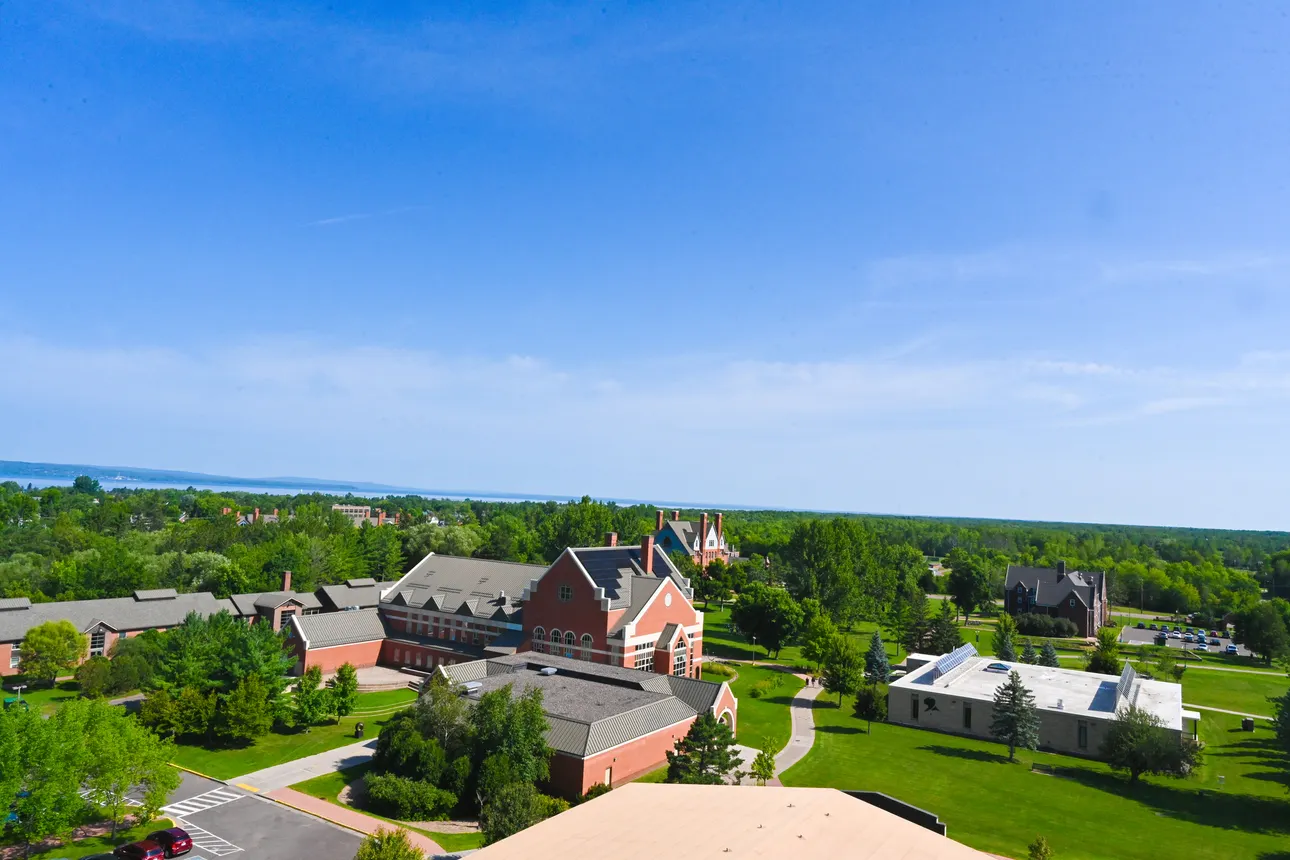
Aerial view of Northland’s campus, in Ashland, Wis., which went up for sale this March.
But even as assets go up for sale, some former faculty are trying to keep Northland’s story — and mission — alive.
Present-day efforts to revive Northland’s mission grew out of conversations and brainstorming among faculty members in early 2024, when the institution warned it might fail if it couldn’t come up with cash.
“The faculty and the staff, and the community and the students, really rallied together and did a whole bunch of community visioning sessions, trying to get new budget plans to try and say, ‘Look, we can make this work,’” said Elizabeth Andre, a former outdoor education professor at Northland.
That plan envisioned a smaller college, with around 350 students. The smaller size “allows us to face the realities of a shrinking pool of college-bound people while building out effective operations across the institution,” the planning document’s authors wrote.
They also suggested focusing the curriculum on a single major — with students picking an emphasis such as in the natural or social sciences or humanities within that major — while also offering skills courses in outdoor and environmental topics to both students and the public.
“It was amazing what faculty did in March and April of 2024 to try to pull it together and change the college,” Fitz said. “We came up with a good plan, and the administration adopted some of it.” Still, officials didn’t take up the “wholesale change” that some faculty pushed for, he added.
Just hours after the college announced it would close, a group of faculty including Andre filed paperwork that would ultimately establish the Northland Collaborative as a nonprofit. It describes itself as an organization created to ensure “that the spirit of Northland College lives on in a way that is an asset to our community and our region.” Much of the vision was already there.
Today, that vision and the passion to keep the Northland spirit alive have coalesced around the idea of launching a microcollege.
“What we really want to do is the best of what we did at Northland. How do we do that?” said Andre, who was part of the group that formed the collaborative.
The team took inspiration from microcolleges such as Thoreau College in Wisconsin and Outer Coast in Alaska, which together enroll only several dozen students. The idea behind them is to offer students close-knit communities and deeply experiential education, often connected to a physical setting.
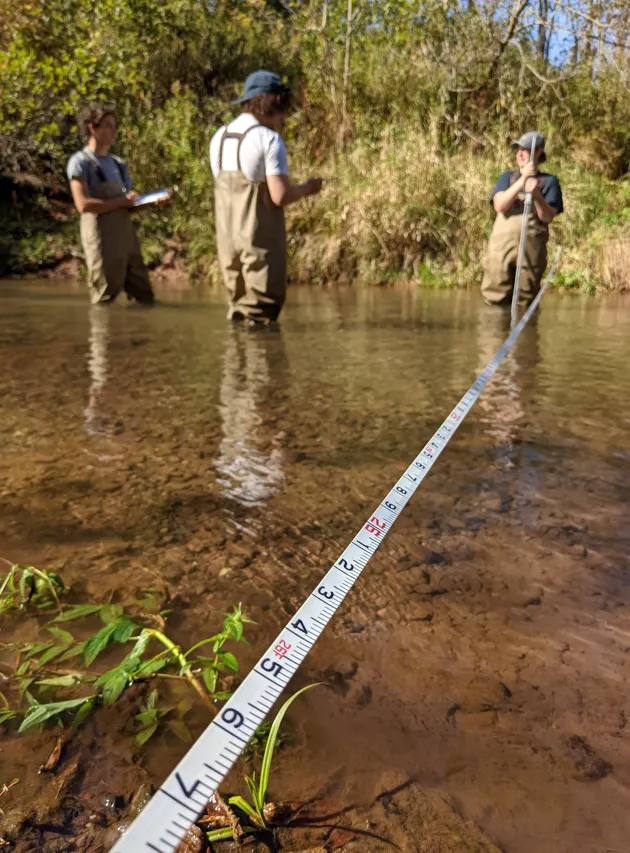
Northland students measure river discharge of Pine Creek just west of Ashland, Wis., for a hydrology class in 2021.
Permission granted by David Ullman
Andre and Macgillivray explained that a Northland-based microcollege would likely start with noncredit community courses and later introduce credit-bearing seminars. From there, it would work toward becoming a two-year degree-granting institution and potentially, someday, four-year degrees.
But even then it would limit its student body to 150 and might offer just one major. The aim, Andre said, is to keep the model “nimble” where Northland had been “rigid.” The old Northland, she said, carried a fairly wide suite of majors and constant enrollment fluctuations that could create chaos for the budget and faculty when the college didn’t meet its enrollment projections.
Ideally, a microcollege would be based on the former Northland campus, assuming some entity buys the campus and would be willing to lease the space. But Macgillivray said the group is flexible and ready to work in other locations as necessary, so long as they are based in either Ashland or across the bay in Washburn, Wisconsin.
The plan could launch with just a handful of staff at the outset, increasing to around a dozen in a few years as the microcollege transitions to undergraduate programs.
“The people who came here and loved it and wanted to stay felt really invested in that mission and the community. Our faculty was of the caliber that they could have worked really anywhere and chose to be here because of the mission.”
Elizabeth Andre
Former Northland professor
The collaboration’s founders also envision it launching on a skinny budget — roughly $300,000 at first launch with a focus on summer seminars, which might rise to around $800,000 when it brings in its first fall cohort of students. That budget could shift as the group works through details, Macgillivray said.
Over 20 potential faculty have expressed interest in teaching at the proposed microcollege, some on a volunteer basis to help it get off the ground. They are people who are passionate about Northland and think there is still a place for its ethos and approach even in a challenged higher ed ecosystem.
“The people who came here and loved it and wanted to stay felt really invested in that mission and the community,” Andre said. “Our faculty was of the caliber that they could have worked really anywhere and chose to be here because of the mission.”